Smoke & CO Alarms
Test monthly, vacuum dust twice a year to stop false alarms, and replace units every 10 years. Need free alarms? Request free detectors online.
NYS Annual Brush Burn Ban
Residential brush burning is prohibited statewide every spring from March 16 through May 14. Burning trash or treated wood is illegal year-round.
Chimney & Wood Stove Safety
Have chimneys and flues swept annually before lighting your first autumn fire, burn only seasoned hardwood, and store ashes in a covered metal can away from decks.
Today is outside the March 16 – May 14 spring ban window (146 days until the 2027 spring burn ban begins). Year-round NYS DEC & Town of Ghent outdoor burning rules still apply.
Can I burn this in Ghent today? Select what you plan to burn to check New York State DEC (6 NYCRR Part 215) & local fire safety rules:
Residential Brush & Downed Tree Limbs
During the annual NYS Spring Burn Ban (March 16 – May 14), all residential brush pile burning is prohibited statewide. Outside the spring ban window, small piles of untreated tree limbs under 3 feet high by 4 feet in diameter are permitted only under calm wind conditions.
- Pile size must never exceed 3 feet in height and 4 feet in length, width, or diameter.
- Burn only bare, untreated tree limbs and woody brush from your own property.
- Keep a charged water hose, buckets, or shovel immediately at hand and never leave the fire unattended.
- Extinguish completely with water until ashes are cold to the touch before walking away or going indoors.

Smoke & CO Alarm Age Calculator
Smoke alarms expire after 10 years; carbon monoxide alarms expire after 5 to 7 years. Check the manufacture date stamped on the back of your detector to verify whether your alarm is still protecting your home.
This detector is valid through January 2032 (63 months remaining).
Your alarm is within its certified service life. Keep it healthy: test it on the first of each month, vacuum dust from the vents twice a year, and replace alkaline backup batteries when setting clocks in the fall.
How to check: Twist the detector counter-clockwise off its ceiling base. On the back plastic casing, look for an ink stamp or silver sticker labeled “MFG DATE”, “MANUFACTURED”, or a 4-digit year. If there is no legible date, the alarm is more than 10 years old and must be replaced.
14 topics
Smoke & carbon monoxide (CO) detectorsPreventionYear-roundPlacement rules, how to stop false alarms, cleaning steps, and carbon monoxide facts.
A working smoke alarm cuts the risk of dying in a home fire in half. According to national fire data, three out of five home fire deaths happen in properties without working smoke alarms, and more than one-third (38%) happen in homes where no alarms are present at all.
Where to install & when to replace
- Install both smoke and carbon monoxide (CO) alarms inside every bedroom, in a central location outside each sleeping area, and on every level of the home (including basements).
- Test every alarm once a month by pressing the test button.
- Change removable batteries twice a year every time you reset your clocks for Daylight Saving Time (unless your unit has a sealed 10-year permanent battery).
- Replace the entire smoke or CO alarm every 10 years (check the manufacture date stamped on the back of the unit) or immediately when its end-of-life chirp sounds.
- Free Detector Assistance: Smoke and carbon monoxide detectors are available at no cost to Ghent households in need. Email support@ghentfire.com or call (518) 392-3838.
Tips to reduce false alarms & how to clean your detectors
Manufacturers list dust, dirt, and insects as the primary causes of nuisance false alarms — especially during warmer months when windows and doors are open and during nighttime hours. Clean your smoke detectors twice each year (at Daylight Saving Time):
- Follow the manufacturer’s cleaning instructions if available; otherwise, remove the detector from its mounting bracket and disconnect power wires if hardwired.
- Remove the replaceable battery (does not apply to 10-year sealed permanent battery models).
- Turn the unit over and gently shake it to dislodge any insects or loose dirt.
- Use a regular household vacuum (do not use a heavy-duty “shop vac”) and run the nozzle gently over all openings around the casing.
- For extra measure, use a can of compressed air to blow out any remaining dust or debris, then run the household vacuum over the openings one more time.
- Reinstall the battery, reconnect wires, remount the detector, and press the test button.
About Carbon Monoxide (“The Invisible Killer”)
Carbon monoxide (CO) is an odorless, colorless, tasteless poisonous gas produced by the incomplete burning of wood, coal, gasoline, natural gas, propane, heating oil, or methane. Common sources include idling vehicles, malfunctioning fuel-burning appliances (furnaces, ranges, water heaters, room heaters), and portable generators. More than 400 Americans die each year from unintentional CO poisoning (per the CDC).
- Low-level exposure symptoms: Dizziness, headache, nausea, or flu-like symptoms.
- High-level exposure symptoms: Mental confusion, vomiting, and loss of muscle coordination.
- Extreme-level exposure: Sudden loss of consciousness and death within minutes before milder symptoms are even noticed.
What to do if your CO or trouble alarm sounds
If you hear an intermittent “trouble” chirp, check for a low battery and replace it. If the alarm still sounds, or sounds a continuous emergency horn:
- Get Out and Stay Out. Move everyone outdoors into fresh air immediately.
- Call 911 from a fresh-air location outside.
- Account for everyone who was inside the home.
- Do not re-enter the building until the fire department has tested the air and declared it safe.
- Do not start or run any vehicle or engine-powered equipment in an enclosed space — explosive gases may be present that could ignite with the turn of an ignition key.
Additional CO prevention rules
- During and after a snowstorm: Make sure all exterior exhaust vents for your dryer, furnace, stove, and fireplace are completely clear of snow build-up.
- Portable generators: Only use generators outdoors in a well-ventilated location at least 20 feet away from windows, doors, and vent openings (keep fuel cans and engine-powered equipment 20 feet away as well).
- Grills: Gas and charcoal grills produce lethal CO — only use them outdoors well away from windows, doors, and vents.
- Annual inspection: Have your heating system, chimney, and exhaust flues inspected and serviced every year by a qualified professional.
- Official resources: U.S. Fire Administration Smoke Alarms · NFPA Carbon Monoxide Safety · US Consumer Product Safety Commission
What to say when you call 911Do this nowIn an emergencyLocation first. Everything else second.
Dispatchers can start sending apparatus before they have the whole story, but only if they know where to send it.
- Where. Street address, and the nearest cross street or landmark. Rural addresses are hard to find in the dark — this is the most important thing you will say.
- What. Fire, smoke, crash, medical, alarm sounding.
- Who. Is anyone inside, injured, or unaccounted for?
- Stay on the line. Do not hang up until the dispatcher tells you to.
If you are out of the building, stay out. Tell the first arriving crew what you know — especially whether anyone is still inside and where they would be.
Turn on your exterior lights and, if you can do it safely, have someone wait at the end of the driveway to flag the trucks in.
What to do while fire trucks are on the wayDo this nowIn an emergencyFive steps after calling 911 that prepare your home and save minutes.
Once you have hung up with 911 dispatch and everyone is safely out of harm’s way, taking these quick steps in the 4–8 minutes before apparatus arrives helps firefighters start operations immediately:
- Turn on all exterior lights. Switch on porch lights, garage lamps, and driveway floods. On dark country roads or in dense smoke, a lit home is immediately identifiable.
- Unlock the front door. If you are safely evacuating, leave the front door unlocked. This allows the initial search crew to enter without spending precious minutes forcing and breaking the door.
- Confine pets safely. If pets are already outside or can be safely secured away from smoke, confine them in a carrier, vehicle, or closed safe room. Panicked animals can run into dangerous areas or trip firefighters in heavy gear.
- Flag down the engine. If another adult is safely outside, have them stand at the driveway entrance with a flashlight or phone light to guide the driver directly into your driveway.
- Never go back inside. Even for pets, wallets, or keys. Smoke and toxic gases can incapacitate a person in seconds. Wait at your assembly point and brief the first arriving officer on whether anyone is unaccounted for.
Chimney and wood stove firesPreventionHeating seasonA common call here, and an avoidable one.
Creosote builds up every time you burn, and it burns hot enough to crack a flue and get into the framing.
- Have the chimney inspected and cleaned once a year, before heating season.
- Burn seasoned hardwood. Green or wet wood makes far more creosote.
- Never burn cardboard, trash, or a Christmas tree in a wood stove or fireplace.
- Keep anything combustible at least three feet from the stove.
- Ash goes in a metal container with a lid, set outside on something non-combustible and away from the house. Ash can hold live coals for days.
If you have a chimney fire — a roaring or freight-train sound, dense smoke, flames at the top of the chimney — get everyone out and call 911. Do not wait to see whether it burns itself out. We would much rather check a chimney that turned out to be fine.
Outdoor and brush burningPreventionSpring & fallNew York restricts it, and spring is the worst time for it.
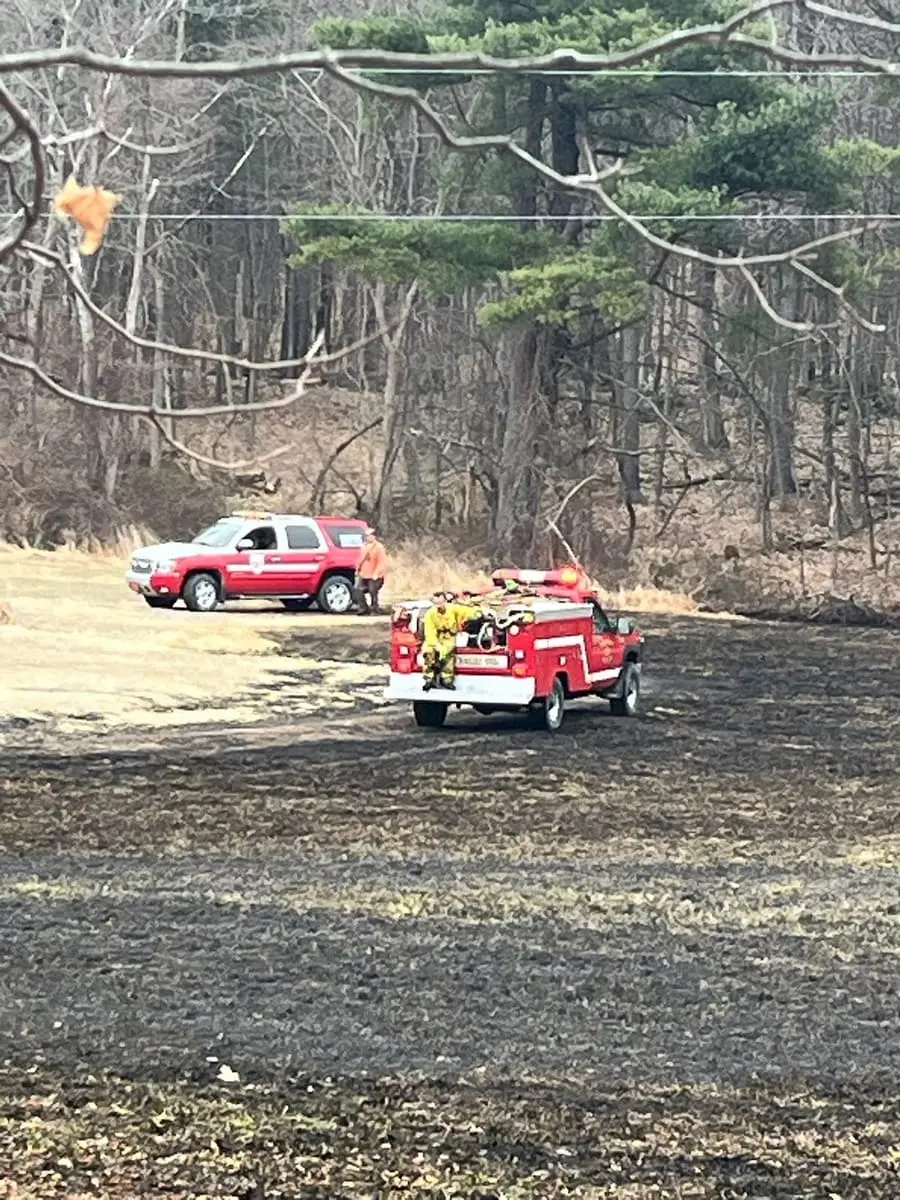
Brush fires that get away from someone are one of the most common reasons we get toned out, and they happen almost entirely in dry, windy spring weather.
- New York bans residential brush burning every spring — historically March 16 through May 14. Confirm the current dates and rules with the NYS Department of Environmental Conservation before you light anything.
- Burning household trash is illegal statewide, year round.
- Never burn on a windy day, and never leave a fire unattended.
- Keep a charged hose or a full extinguisher within reach.
- Drown the ashes when you are done. “It looked out” is how we end up in your field at two in the morning.
If a fire gets away from you, call 911 immediately. Calling early is the difference between one engine and half the county.
Winter safetyPreventionWinterHeating season is our busiest season.
Space heaters. Three feet of clear space on every side. Plug directly into the wall — never into an extension cord or a power strip. Turn it off when you leave the room or go to bed.
Generators. Outdoors only, well away from the house, and never in a garage even with the door open. Generator exhaust is the most common source of fatal carbon monoxide poisoning after a storm.
Frozen hydrants and driveways. If there is a hydrant near your property, clear three feet around it after a storm. Keep your driveway and the area around your house passable for a fire truck — an engine is wider and heavier than a plow truck.
Ice. Stay off ponds unless you know the thickness. If someone goes through, do not go after them. Call 911, and reach or throw from shore.
Home escape planPreventionYear-roundYou may have less than two minutes. Decide now, not then.
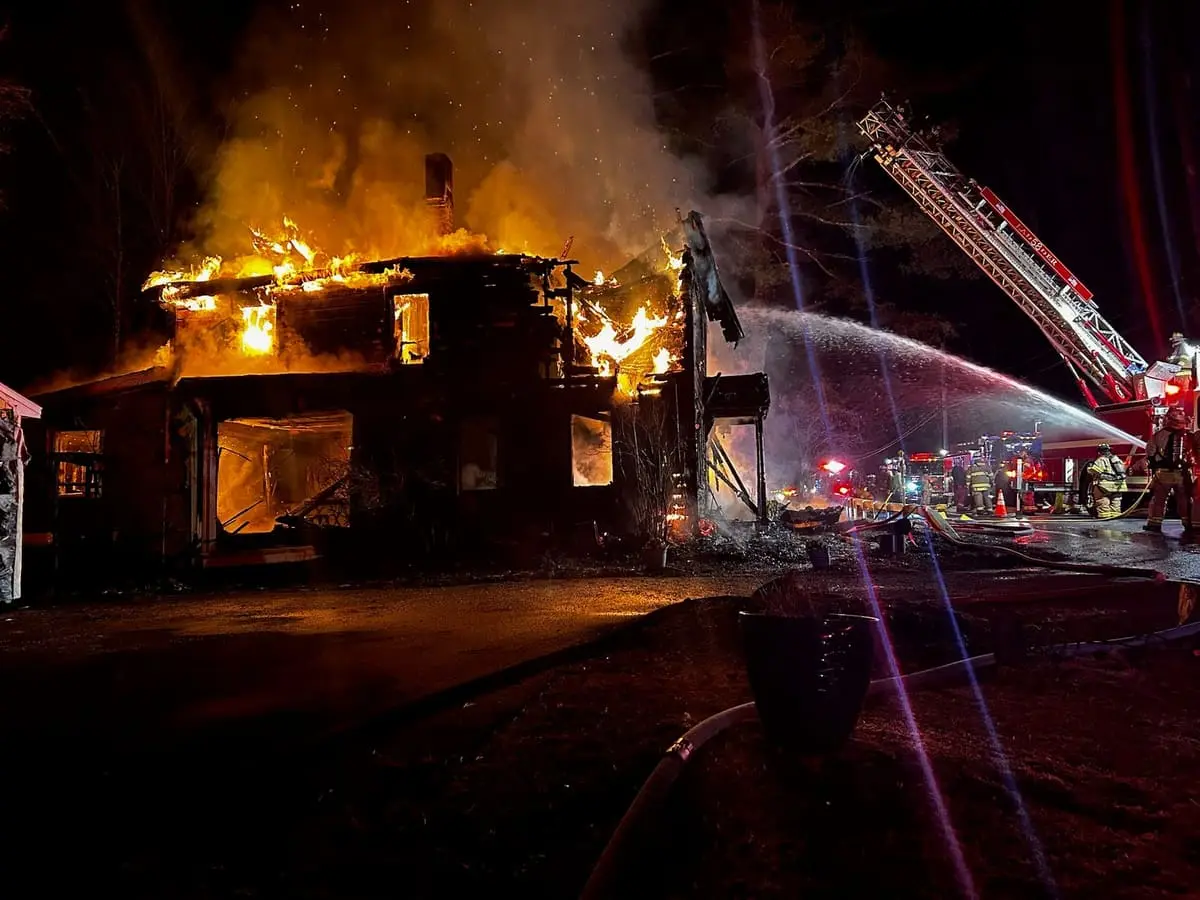
Modern furnishings burn far faster than they used to. Once the smoke alarm sounds, assume you have under two minutes to get out.
- Find two ways out of every room — usually a door and a window.
- Make sure every window and screen actually opens. Check the ones you never use.
- Pick a meeting place outside, in front, a safe distance from the house: a mailbox, a specific tree, the end of the driveway.
- Practice the plan twice a year, including once at night.
- Teach children that firefighters in gear are not something to hide from. We look and sound frightening in a mask.
Once you are out, stay out. Never go back inside for a pet, a phone, or paperwork. Tell the first crew on scene who is missing and where they sleep — and let us go in for them.
Move Over, Slow Down & Courtesy Blue LightsPreventionOn the roadGive responders room to work on the roadside and yield to volunteers responding with flashing blue lights.
While overall on-duty firefighter fatalities nationwide have declined over the decades, firefighters and emergency responders struck by passing vehicles on roadways have more than doubled. Everyone wants to go home at the end of the call — please give our crews room to work.
New York State “Move Over — Slow Down” Law
As soon as you see flashing emergency lights, reflective vests, flares, or cones ahead on the roadway:
- Check traffic around your vehicle immediately.
- Slow down at least 20 MPH below the posted speed limit — and even slower in rain, snow, fog, or darkness.
- Move over at least one full lane away from the incident, apparatus, and responders whenever safe to do so.
- Immediately stop phone calls and texting — keep both hands on the wheel.
- Focus 100% on the roadway scene and watch for firefighters, fire police, or tow operators walking near apparatus.
Flashing blue lights on personal vehicles
When emergency tones sound in Ghent, our unpaid volunteers drop what they are doing and respond from their homes, farms, or workplaces in their personal vehicles. Under New York State Vehicle & Traffic Law (Section 375-41), active volunteer firefighters display a flashing blue courtesy light when answering an alarm:
- What it means: Your neighbor behind the wheel is responding to the Ghent firehouse to board an engine or driving to an emergency scene.
- What you should do: Check your mirrors, put on your right turn signal, and safely pull over to the right so the volunteer can pass. On two-lane roads like Route 66, Route 9H, and County Route 22, yielding early gets our first fire engine out the bay doors minutes faster.
Downed overhead wires, power outages, and generatorsDo this nowStorms & outagesThree rules for fallen power lines, deadly electrical myths, and safe generator operation.
Nor’easters, winter ice storms, and summer wind gusts frequently bring heavy trees down across Columbia County’s rural utility lines. Low or downed wires can be fatal even at long distances.
Three rules for fallen overhead wires
- Rule #1 — Treat all wires as high-voltage and energized: Even telephone, cable, and fiber data wires can carry a lethal electrical charge if they are touching high-voltage primary lines further down the road beyond your line of sight.
- Rule #2 — Stay at least one full pole-span away: Even soil and wet pavement conduct electricity. Stay at least one complete utility pole span away in all directions from a broken wire, and warn others to stay back.
- Rule #3 — Call 911 immediately: 911 will dispatch Ghent firefighters and law enforcement to secure the scene first, and notify the utility company’s emergency line crew.
Dangerous myths vs. facts about downed power lines
- MYTH: “Tires are electrical insulators.” FACT: Tires are electrical conductors, not insulators. You are safe inside your car when a live wire falls on it only because the metal vehicle body forms a path around you through the tires into the ground. Stay inside your vehicle until NYSEG or National Grid shuts off the power. If a vehicle fire forces you to evacuate, jump completely clear with both feet together so you never touch the vehicle and the ground at the same time.
- MYTH: “Power lines are insulated.” **FACT:**Roughly 90% of outdoor overhead power lines are not insulated, and weather-coatings on the remaining 10% degrade over time. No overhead line is ever safe to touch.
- MYTH: “Only high voltage is dangerous.” FACT: Voltage is the pressure, but amperage (amps) is what kills. It takes less than one-quarter of one amp to put a human heart into fatal ventricular fibrillation — while a typical home service carries 100 to 200 amps.
- MYTH: “When a wire falls to the ground, it automatically shuts off.” FACT: Utility breakers trip only when they detect a massive sudden short circuit. A wire resting on dry soil, asphalt, or a tree often does not draw enough current to trip the breaker and remains fully energized.
- MYTH: “A live wire always sparks or hums.” FACT: A wire sparks only when making loose, intermittent contact. Once it rests firmly on the ground, it often makes zero noise and zero sparks while remaining lethal.
- MYTH: “Wood and household rubber boots/gloves insulate you.” FACT: Damp wood conducts electricity readily, and household rubber gloves or shoe soles contain durability additives that make them electrical conductors. Only utility-grade 100% pure tested rubber insulates against line voltage.
Portable generator safety
- Never run a generator indoors, in a basement, or inside a garage, even with the garage door open. Carbon monoxide (CO) can reach lethal concentrations in minutes.
- Place generators outdoors at least 20 feet away from any window, door, or vent, with exhaust pointed away from the home.
- Never plug a generator into a wall outlet (“backfeeding”). Backfeeding sends lethal step-up voltage back onto utility lines, endangering line workers and firefighters.
- Let the generator cool for 15 minutes before refueling.
Outage reporting numbers
- NYSEG Emergency & Outages: 1-800-572-1131
- National Grid Outages: 1-800-867-5222
- Columbia County 911 (Emergencies only): 911
If you smell gas: propane & natural gas safetyDo this nowIn an emergencyImmediate evacuation steps, how propane pools in low areas, cylinder storage, and local fuel emergency numbers.
If you smell the “rotten egg” odor of propane or natural gas inside or near your home, treat it as an immediate explosion hazard:
Immediate emergency checklist
- Immediately extinguish all smoking materials, candles, and open flames.
- DO NOT turn on or off any electrical switches, appliances, or lights. Flipping a light switch, thermostat, or garage door opener creates a tiny internal electrical spark that can trigger an explosion.
- DO NOT turn on or use any phone (including cell phones) while you are still within range of the gas smell.
- Leave the area immediately. Get everyone out right away — do not waste time gathering keys, purses, wallets, or pets.
- Shut off the main gas supply valve only if it is outdoors at a safe distance away from the leak and you know how to do so safely.
- Report the leak from a safe distance. Once you are well away from the building, call 911 and your gas supplier immediately.
- Do not return to the building or area until firefighters, emergency responders, or a qualified utility technician have metered the structure and declared it safe. Do not use any gas appliance until it has been inspected by a qualified professional.
How propane and natural gas differ
- Natural gas is lighter than air — in a leak, it rises toward ceilings and dissipates more quickly when ventilated.
- Propane is heavier than air. When released, propane sinks to the floor or ground and seeks the lowest level (basements, crawlspaces, floor drains, and ditches) where it pools instead of dissipating, creating a severe explosion risk if ignited by a furnace pilot, water heater, or sump pump.
Portable propane cylinder transport & storage
- During transport: Always ensure good vehicle ventilation, secure cylinders upright so they cannot tip or roll, and drive directly home from the fill site without leaving tanks inside a hot parked car (overheating can cause the propane to expand and vent through the pressure relief valve).
- Never store propane cylinders indoors — never inside your home, basement, or attached garage.
- Never store spare cylinders inside your outdoor grill cabinet next to the active burner, or anywhere temperatures can exceed 120°F.
Local fuel & propane emergency contacts
(Provided as a community courtesy; in any immediate danger, dial 911 first.)
- Columbia Gas & Electric: 518-732-4910
- Ferrellgas: 800-824-7242
- First Fuel & Propane: 518-828-8700
- Heim Fuel Service: 518-784-5136
- HL Propane Co., Inc.: 518-794-9066
- Long Energy: 518-556-6041
- Suburban Propane: 518-489-3271
Dryer vent & laundry room firesPreventionYear-roundNearly 16,000 home fires a year start in laundry rooms — and a third are caused by lint buildup.
According to the U.S. Fire Administration and NFPA, fire departments respond to roughly 15,970 home fires involving clothes dryers or washing machines every year across the United States, resulting in an average of 13 deaths, 440 injuries, and $238 million in property damage annually.
Key facts
- Clothes dryers account for 92% of laundry fires (washing machines account for 4%, and combo units 5%).
- Failure to clean lint is the #1 cause of clothes dryer fires (accounting for one-third of all ignitions).
Dryer fire prevention checklist
- Never run the dryer without a lint filter, and clean the lint screen before or after every single load of laundry. Periodically remove lint that collects around the drum seal.
- Use rigid or flexible metal venting material between the dryer and the exterior wall to maintain proper airflow and drying time — replace flammable plastic or thin foil accordion ducts.
- Inspect your outdoor exhaust flap: Make sure the exhaust pipe is not crushed behind the dryer and that the outdoor vent flap opens freely when the dryer is running.
- Clean the full exhaust duct once a year (or sooner if you notice clothes are taking longer than normal to dry), or hire a dryer vent cleaning service.
- Turn the dryer off when leaving home or going to bed, and never overload the drum.
- Gas dryers: Have gas dryers installed and periodically inspected by a qualified professional to ensure the gas line and connectors are free of leaks.
- After snowstorms: Check that outdoor dryer, furnace, and stove exhaust vents are clear of drifted snow.
Rural dry hydrants & water fill sitesPreventionRural water supplyHow roadside standpipes supply water across the 83% of Ghent without municipal hydrants.
You have likely seen PVC or steel standpipes rising beside ponds and bridges along Ghent’s country roads. Known as dry hydrants, these roadside pipes are a cornerstone of the Ghent fire protection plan — serving as our primary water source across the roughly 83% of our district not served by pressurized town fire hydrants.
When a structure or barn fire occurs outside the village hydrant network, we haul water from these fill sites using tanker shuttles. Large incidents require multiple tankers cycling continuously between two or more fill sites and the fire scene. The closer and more accessible our fill sites are, the faster our tankers can deliver uninterrupted water to firefighters inside.
How a dry hydrant works
- Submerged strainer (A): A perforated strainer cap sits deep below the ice line in a pond, lake, or stream so vegetation and wildlife are never drawn into the pipe.
- Underground piping (B): An 8-inch diameter pipe runs underground from the water source to a roadside pull-off where heavy fire apparatus can park year-round.
- Above-ground suction fitting (C): A threaded steamer connection sits above ground level at the roadside.
- Hard-suction connection (D): An arriving pumper connects a heavy flexible suction hose between the dry hydrant head and its fire pump to draft water out of the pond.
- Tanker shuttle or direct attack (E): The pumper rapidly fills arriving tanker trucks (such as Tanker 22-35) to shuttle water to the fire, or pumps directly to attack lines if the incident is nearby.
How Ghent landowners can help
All of Ghent’s rural fill sites are voluntarily hosted by local landowners as a service to their neighbors:
- If there is a dry hydrant near your property, please help us by keeping brush cut back and clearing 3 feet of snow around the standpipe and pull-off after winter storms.
- Have a large year-round pond or stream? We are always looking to expand our rural dry hydrant network. If you own land with a reliable water source near a road and are willing to discuss access for a dry hydrant, please contact the fire company.
Lithium-ion batteries & garage charger safetyDo this nowYear-roundSafe charging and storage for cordless yard equipment, power tools, e-bikes, and household devices.
Rechargeable lithium-ion battery packs power everything from cordless chainsaws, string trimmers, and lawnmowers in Ghent garages to laptops, phones, and e-bikes. When damaged, overcharged, or exposed to extreme heat or freezing temperatures, lithium-ion cells can enter thermal runaway — an intense chemical fire that produces toxic gas and is difficult to extinguish with a standard household fire extinguisher.
Six rules for safe charging at home and in the barn
- Use only the manufacturer’s original cord and charger: Cheap aftermarket replacement chargers and off-brand battery packs often lack the internal battery management circuitry that prevents overcharging. Look for UL or ETL safety certification marks.
- Never charge batteries blocking an exit or hallway: Always charge e-bikes, scooters, and large lawn/power tool battery packs in a detached garage, workshop, or well-ventilated area away from doors and stairways.
- Charge on a hard, non-combustible surface: Never charge phones, tablets, or laptops on beds, couches, or under pillows where heat cannot escape.
- Unplug once fully charged: Do not leave 40V/60V/80V yard equipment or power tool batteries plugged into wall chargers unattended all winter.
- Bring tool batteries indoors before sub-freezing winter nights: Charging a frozen lithium-ion battery pack in an unheated barn or shed can cause internal plating and short circuits. Store battery packs in a dry, temperature-moderate space between 40°F and 80°F.
- Stop using a damaged battery immediately: If a battery pack is dropped on concrete, submerged in water, or shows any warning signs below, isolate it outdoors away from structures.
Warning signs of battery failure (thermal runaway)
If you notice any of these signs, unplug immediately if safe to do so, move people and pets away, and call 911:
- Bulging, swelling, or cracking of the plastic battery casing
- Hissing, popping, or whistling sounds coming from the pack
- A sharp chemical, metallic, or sweet odor
- Excessive heat or wisps of white/gray vapor
How to dispose of old or swollen batteries in Columbia County
- Never throw lithium-ion batteries into household trash or recycling bins. Compaction in garbage trucks crushes the cells and causes truck and transfer-station fires.
- Tape the battery terminals with clear packing tape or electrical tape and bring them to a Columbia County Solid Waste convenience station or a participating hardware retailer (Call2Recycle drop-off).
Barn, outbuilding & farm fire preventionPreventionYear-roundProtecting Ghent barns, hay lofts, chicken coops, and equipment sheds from preventable fires.
Ghent’s agricultural heritage means many properties across our 18,954-acre (~30-square-mile) primary district and the 45-square-mile Town of Ghent include historic timber-frame barns, horse stables, equipment sheds, and backyard chicken coops. Because barns contain dry bedding, hay, fuel, and dust — and often sit far back from town roads — prevention and early access are critical.
Hay storage & spontaneous combustion
Damp or improperly cured hay is a leading cause of summer and autumn barn fires. Microbial activity inside wet bales generates heat that can build to ignition temperatures (150°F–170°F) within two to six weeks of baling:
- Bale and store dry: Ensure hay is properly cured (typically under 15–18% moisture for large bales and under 20% for small square bales) before stacking inside an enclosed loft.
- Monitor newly stacked hay: Check for a sweet, caramelized, or musty tobacco-like odor, visible steam, or wet condensation on the top layer of bales.
- Never walk directly on a suspected hot spot: Internal cavities can burn out underneath the surface of a haymow. Call 911 so firefighters can monitor with thermal imaging cameras and stand by with charged hoselines while hot bales are removed.
Brooder lamps & winter livestock heaters
Glass infrared heat lamps in chicken coops, lambing pens, and barn stalls cause numerous winter fires across Columbia County every year:
- Avoid hanging clamp lamps by their cord or spring clamp alone: Restless animals easily knock them into dry pine shavings or straw. If a radiant heater is needed, use a UL-listed flat-panel radiant brooder heater or secure lamps with two independent metal chains at least 24 inches above bedding.
- Use caged, dust-tight agricultural fixtures: Barn dust and cobwebs ignite easily against exposed hot bulbs.
- Keep heated stock-tank de-icers on GFCI-protected circuits: Inspect cords annually for rodent chewing and use thermostatically controlled, metal-guarded tank heaters.
Tractors, mowers & fuel storage
- Store gasoline, diesel, and propane in a separate shed away from livestock barns and main residences whenever possible.
- Let hot tractors, bush hogs, and lawnmowers cool outside for 15–20 minutes after mowing dry fields before parking them inside a barn, and blow dry chaff off exhaust manifolds and deck spindles.
- Mount a 10-lb ABC dry chemical fire extinguisher just inside the main entrance door of every barn and workshop.
- Keep barn lanes clear for Tanker 22-35: Maintain at least 12 feet of width and 13.5 feet of overhead clearance on farm lanes, and let Ghent VFC No. 1 know if you have a farm pond suitable for year-round fire drafting.
How to Use a Fire Extinguisher (P.A.S.S.)
Only fight a small, contained fire if everyone is evacuating, 911 has been called, and you have a clear exit behind you.
- P
Pull the Pin
Break the tamper seal and pull the safety locking pin straight out from the handle.
- A
Aim Low
Point the nozzle or hose directly at the base of the fire where the fuel is burning, not at the flames.
- S
Squeeze the Lever
Squeeze the operating lever slowly and evenly to discharge the extinguishing agent.
- S
Sweep Side to Side
Standing 6 to 8 feet back, sweep the nozzle side to side across the base of the fire until out.
Ordinary Combustibles
Wood, paper, cloth, trash, cardboard, and ordinary plastics.
Flammable Liquids & Gases
Gasoline, motor oil, cooking grease, oil-based paint, solvents, and propane.
Electrical Equipment
Energized wiring, breaker panels, space heaters, appliances, and electronics.
All-in-One Home Protection
Dry chemical extinguishers rated for Class A, B, and C fires in kitchens, basements, and garages.
Recovering from a recent fire or storm emergency?
Find step-by-step guidance on securing property, contacting utility providers and the American Red Cross, and requesting your incident report for insurance.
A note about donation requests
If you are contacted for a donation and you are not certain it came from us, call the company at 518.392.3838 or email support@ghentfire.com before you give. See our Support & Donate guide to learn how to give safely.
Emergency Agencies & Utility Hotlines
Direct numbers for power outages, downed wires, gas leaks, and county emergency management.
Life-Threatening Emergency
Columbia County 911 Dispatch — Fire, EMS, Rescue & Police
NYSEG Power & Downed Wires
Electric outages, arcing lines, fallen power poles (24/7 emergency hotline)
National Grid Electric & Gas
Gas leaks, odor of natural gas, power interruptions (24/7 emergency hotline)
American Red Cross Disaster Team
Immediate lodging, food stipends, clothing & prescriptions (Eastern NY Chapter)
Columbia County Sheriff
Non-emergency dispatch, road closures, property security
NYS Police Troop K (Livingston)
State Police regional barracks serving Columbia County
Ghent Town Hall & Building Dept
Town code enforcement, post-incident safety inspections & permits
Poison Control Center
Chemical exposure, smoke inhalation, toxic ingestion advice (24/7)
Answer the Call — Join Ghent VFC No. 1
Whether you want to fight fires, drive apparatus, direct traffic as Fire Police, or support rehab and events, we provide all gear and NYS training at $0 cost to you.
Support Your Volunteer Firefighters
Every dollar stays in Ghent to fund turnout gear, rescue tools, and firefighter safety. Give online with 0% fees via Zeffy or mail a check:

Find us
Firehouse
Opens in Google MapsMail & Donations
P.O. Box 32
Ghent, NY 12075